

Your private health insurance
Circle Health Group works with all major UK health insurance providers. Simply let your provider know your chosen hospital to begin your treatment journey.
 Initial consultation price:
£220
Initial consultation price:
£220
Initial consultation price:
£220
Initial consultation price:
£220
The next 5 years were spent as a Specialist Registrar on the North of Scotland Trauma and Orthopaedic Rotation. In 2007 he passed the Intercollegiate Trauma and Orthopaedic Exam and became a Fellow of the Royal College of Surgeons of Edinburgh.
In July 2008 he took up post as an Advanced Hand Trainee, appointed by the Interface Group in Hand Surgery, in Oxford working with internationally known hand surgeons Peter Burge, Henk Geile, Ian Mcnab, Paul Critchley and Chris Little. From January 2009 to October 2009, he took a further Interface appointed Advanced Hand Training Post, at Wrightington Hospital, working with Internationally known surgeons Professor John Stanley, Ian Trail, Mike Hayton and Professor Raj Murali. This has developed his interest in small joint arthroplasty in the hand and wrist, with a national expertise in this area.
Mr Broadbent is an established Hand and Upper Limb Surgeon in the West of Scotland. His current NHS practice is at Inverclyde Royal Hospital (IRH) and The Royal Alexandra Hospital (RAH), where he manages patients from the Clyde catchment, but also receives tertiary and out-of-area referrals. Since 2009, he has had established clinics at Ross Hall Hospital.
Mr Broadbent remains actively involved in teaching and research, with established involvement in the Edinburgh Hand Course, the treatment of Dupuytren’s disease, and complex hand and wrist reconstruction. He also has an interest in “Wide awake” surgery (WALANT – Wide awake, local anaesthetic, no tourniquet). This allows patients to remain awake, when undertaking upper limb and hand surgeries (although sedation can be used if patients are anxious). He also works with a few very experienced anaesthetists who can perform upper limb blocks. Both these types of anaesthetics remove the need for a general anaesthetic, decrease the risks around surgery, and allow for a shorter, and more pleasant admission.
Mr Broadbent also has a specialist interest in medicolegal work, with over 15 years of experience Nationally, providing reports for both the Pursuers and Defenders.
Sports injuries:
Acute hand and wrist trauma and fractures:
Tendon injuries and problems:
Peripheral nerve injury and entrapment and compression:
Dupuytren's disease:
Arthritis of the hand:
Arthritis of the thumb:
Arthritis of the wrist:
Lumps and bumps:
Elbow conditions:
Shoulder conditions:
Ross Hall Hospital, 221 Crookston Road, Crookston, G52 3NQ
As Scotland's largest private hospital, we offer a wide range of private services for those who live in Glasgow and the West of Scotland
Circle Health Group works with all major UK health insurance providers. Simply let your provider know your chosen hospital to begin your treatment journey.


4527811
A General Medical Council (GMC) number is a unique ID that shows a specialist is officially registered and approved to practice medicine in the UK.
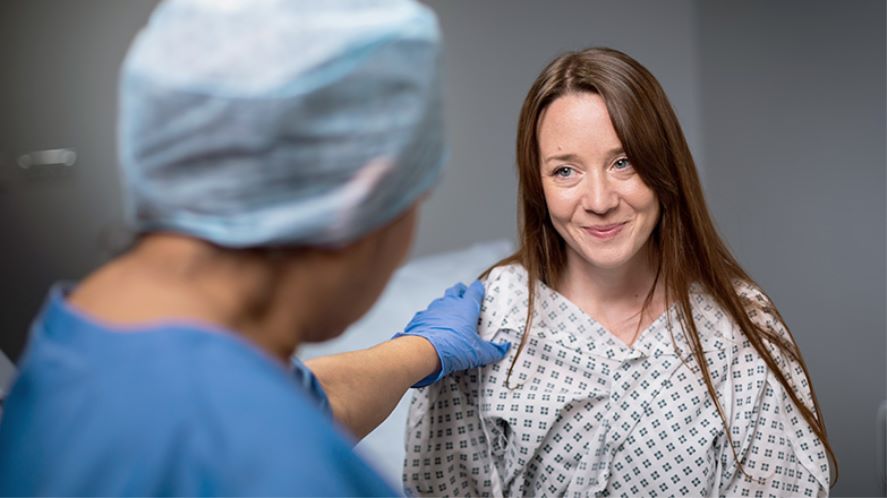
We want to make it as easy as possible for you to find the information you need, so we've gathered a list of frequently asked questions about our hospitals and services
You can either book an consultation via the online booking process, fill in the enquiry form, or give us a call at 0808 101 0337.
Find out how much private healthcare costs and how these prices break down.
Whether you have your own private medical insurance policy or are covered through your employer, we'll guide you through how to make a claim for treatment at a Circle Hospital.
The number one benefit of private healthcare for most people is that you'll experience a shorter waiting time for treatment. We don't have long waiting lists, and in general you'll simply get treatment as and when you need it.
As a private patient, you shouldn't experience long waits between appointments. We can usually offer you an initial consultation within days of you getting in touch, and we'll book you in for the treatments you need on a date and time that suits you.
Still not answered your question?
Read our full FAQs here