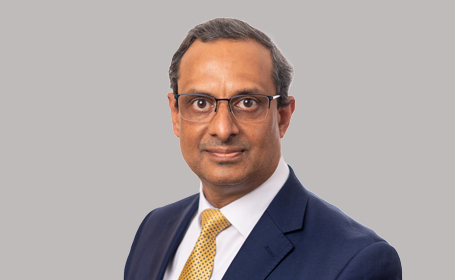
Divyang Shukla

Consultant Orthopaedic Surgeon

Divyang Shukla

Consultant Orthopaedic Surgeon

About Divyang Shukla

Personal Profile

Mr Divyang Shukla is a highly experienced Consultant Orthopaedic Surgeon specialising in the diagnosis and treatment of knee, hip, shoulder and sports injuries. He has a particular focus on arthroscopic (keyhole) surgery and joint replacement (arthroplasty), helping patients return to mobility and reduce pain.

Training and Background

Mr Shukla qualified in medicine in 1990. He completed specialist orthopaedic training in India before continuing his training in the UK.

He further developed his expertise through advanced fellowships, including:

  • Shoulder surgery and lower limb reconstruction at Monash University, Melbourne, Australia
  • Limb reconstruction and polytrauma in Ludwigshafen, Germany

This international experience has supported his development in managing both routine and complex orthopaedic conditions.

NHS and Private Practice

Mr Shukla has worked in several respected UK hospitals, including:

  • Kettering General Hospital
  • Nuffield Orthopaedic Centre, Oxford
  • Princess Margaret Hospital, Swindon
  • Sandwell Hospital, Birmingham

He has been a Consultant Orthopaedic Surgeon at Kettering General Hospital since 2003.

In addition, he began his private orthopaedic practice in Northampton at Three Shires Hospital in June 2015, where he runs weekly clinics on Thursday afternoons.

Areas of Expertise

Mr Shukla provides assessment and treatment for a wide range of orthopaedic conditions, including:

  • Shoulder and knee surgery
  • Arthroscopic (keyhole) surgery
  • Shoulder decompression and stabilisation
  • Shoulder resurfacing
  • Frozen shoulder treatment
  • Hip and knee replacement surgery
  • Shoulder pain and knee pain management
  • Sports injury treatment

Clinical Interests

Mr Divyang Shukla specialises in Trauma & Orthopaedics, with a focus on the treatment of knee, hip, shoulder and sports injuries. He provides both surgical and non-surgical care aimed at reducing pain, improving mobility, and supporting recovery.

Knee Conditions and Treatments

  • Knee replacement surgery
  • Partial (unicompartmental) knee replacement
  • Knee arthroscopic (keyhole) surgery for meniscal tears and ligament reconstruction
  • Treatment for knee pain and sports-related knee injuries

Hip Conditions and Treatments

  • Hip replacement surgery
  • Assessment and management of hip pain

Shoulder Conditions and Treatments

Shoulder arthroscopic (keyhole) surgery for:
  • Rotator cuff injuries
  • Frozen shoulder
  • Shoulder impingement
  • Shoulder dislocation and instability
  • Shoulder replacement surgery
  • Treatment for shoulder pain and sports injuries
  • Elbow, Hand and Wrist Conditions
  • Tennis elbow (lateral epicondylitis) and general elbow pain
  • Carpal tunnel syndrome
  • Dupuytren’s contracture of the hand and palm
  • Trigger finger and hand pain

NHS and or University Posts

  • Kettering General Hospital

Professional Memberships

  • British Hip Society (BHS)
  • British Association of Surgery of Knee (BASK)
  • British Elbow and Shoulder Society (BESS)
  • British Orthopaedic Association (BOA)

Research Interests

Publications:

  1. Odontoid Metastasts ; a potential lethal complication.
    F. Ryan, C.Mukundan, DD Shukla, RL Barrington
    J Orthop Traumatol. 2009 December; 10(4): 199–201.
  2. Bovine cancellous xenograft in the treatment of tibial plateau fractures elderly Patients.
    M. Bansal, D. Shukla
    International Orthopaedics : 2009 June; 33(3): 779–784.
  3. A Case of relapsing Salmonella Ostemyelitis in a Thalassaemia trait patient.
    F.Rayan, C. Mukundan, D D Shukla
    J Orthopaedics and Traumatology . 2009 March; 10(1): 31–33.
  4. Clinical , Arthroscopic and MRI Correlation in diagnosis of Acute meniscal and ACL knee injuries.
    D Shukla, S. Bhonsle
    International Orthopaedics. February 2008
  5. Allograft bone substitutes in acute proximal tibial fracture management in elderly
    Patients. - D Shukla, M.Bansal
    Injury : February 2008 ( On line published followed by Journal )
  6. Periprosthetic Femur Fractures in Octogenarians : Are plating system The Answer?
    Journal of Orthopaedic Surgery, 2007, Volume 4 , Number 2
  7. Management of Peri Prosthetic Femur fractures. What works?
    D.D. Shukla, F.Ryan, C.Mukundan
    Injury Extra, Volume 38, Issue 1, January 2007, Page 27-28
  8. Clinical , Arthroscopic and MRI Correlation in diagnosis of Acute meniscal and ACL knee injuries.
    D Shukla, S. Bhonsle
    International Orthopaedics. February 2008 ( On line published followed by journal )
    Prospective Study of 153 cases looking at best and appropriate method to identify accuracy of diagnosis, positive and negative predictive value, specificity and sensitivity of each of these methods.
  9. Bovine cancellous xenograft in the treatment of tibial plateau fractures in elderly patients.
    M. Bansal, D. Shukla
    International Orthopaedics : March 2008
  10. Allograft bone substitutes in acute proximal tibial fracture management in elderly patients.
    D Shukla, M.Bansal
    Injury : February 2008 ( On line published followed by Journal )
    Prospective study of comminuted proximal tibial fractures in elderly patients using allograft bone substitute with internal fixation , avoiding surgery of obtaining bone graft.
  11. Periprosthetic Femur Fractures in Octogenarians : Are plating system the answer ?
    Journal of Orthopaedic Surgery, 2007, Volume 4 , Number 2
    • 23 cases of peri –prosthetic femur fractures
    • treated with Dall-Miles cable plate or Mennen plate
    • High failure rate with plating system in comparison to when femur stem revised to a long stem .
  12. Management of Peri Prosthetic Femur fractures. What works?
    D.D. Shukla, F.Ryan, C.Mukundan
    Injury Extra, Volume 38, Issue 1, January 2007, Page 27-28
    • study looking at the outcome comparing plating v/s intra medullary fixation method of fixation and looking at the outcome.
    • High failure rate observed with plating systems and high incidence of locking screw fixation failure and stem migration observed with Cannulock stems.
  13. Corrosion of Cemented Titanium Femoral Stems :
    S.Thomas, D.D. Shukla, P.D. Latham
    - JBJS ( Br.) 86-B, No.7, September 2004, Pages 974 – 978
    • Crevice corrosion in titanium cemented stems requiring revision surgery
    • cases of painful cemented femoral titanium stems showing classical fusiform cortical thickening in Zones 3,4,5 in all cases requiring revision surgery
  14. Outcome of Intra articular fractures of Distal Humerus in Adults.
    Mr. D.D. Shukla
    • 42 cases of AO type B and C variety treated with open reduction and internal fixation
    • Poor outcome identified with unstable fixation and type C3 fractures irrespective of type of fixation.
    • Olecranon osteotomy is likely to give better result in comparison to triceps approach
    Publication as a full article :
    Proceedings of 6th European Congress of Trauma and Emergency Surgery
    Current Contents
    ISI Publications, Philadelphia, USA.
  15. Corrosion of Cemented Titanium Femoral Stems :
    S.Thomas, D.D. Shukla, P.D. Latham
    • Abstract of poster presentation at British Hip Societypublished in
    • JBJS ( Br.) 2003;85-B, Supplement 1,
    • 12 cases of painful cemented femoraltitanium stems showing classical fusiform cortical thickening in Zones 3,4,5in all cases requiring revision surgery
  16. Bilateral Spontaneous ruptures of Achilles Tendon Secondary to Limb Ischemic.
    D.D. Shukla
    Journal of Foot & Ankle Surgery, USA. September 2002,Vol. 41, Number 5, 328-329
    • correlation of spontaneous rupture of tendon with poor arterial circulation of limb , in absence of other predisposing factors.
  17. Intra-capsular Fracture Neck of Femur : Can we fix it better ? Bio Geometric Study.
    D.D. Shukla
    • Bio Geometric study of 20 Cadaveric proximal femur bones with CT Scan
    • Analysis of two different triangular configuration for Cannulated screws fixation
    • Conclusion : Reverse triangular configuration for Cannulated screws fixation is likely to achieve better, stable and reliable fixation.
    Abstract to be published in JBJS ( Br )
    Paper Presentation at BOA ( British Orthopaedic Association ) Annual conference in Birmingham, September 2005.
  18. Outcome of 35 cases of Knee and Foot Deformities treated with Ilizarov Ring Fixator for various indication
    D.D. Shukla, J.J. Patwa
    Gujarat State Orthopaedic Association Journal, India, December 1993
    • Use of ring fixation for correction of complex deformities of foot and Knee in conditions like --- Poliomyelitis, Club Feet & Post - traumatic deformities.

Useful Links

About

Locations

Treatments

Insurers


Location


Treatments offered by Divyang Shukla


Your private health insurance

Circle Health Group works with all major UK health insurance providers. Simply let your provider know your chosen hospital to begin your treatment journey.


More useful information

Languages spoken

English

GMC number

4395427
A General Medical Council (GMC) number is a unique ID that shows a specialist is officially registered and approved to practice medicine in the UK.

Qualifications

MBBS, MS (Orth), DNB (Orth), MCh (Orth), FRCS, FRCS (Trauma and Orth), Fellow of European Board of Trauma and Orthopaedics

Professional memberships

  • British Hip Society (BHS)
  • British Association of Surgery of Knee (BASK)
  • British Elbow and Shoulder Society (BESS)
  • British Orthopaedic Association (BOA)

Full list of treatments Divyang Shukla offers


Frequently asked questions and other useful information

We want to make it as easy as possible for you to find the information you need, so we've gathered a list of frequently asked questions about our hospitals and services

  • You can either book an consultation via the online booking process, fill in the enquiry form, or give us a call at 0808 101 0337.

  • Find out how much private healthcare costs and how these prices break down.

  • Whether you have your own private medical insurance policy or are covered through your employer, we'll guide you through how to make a claim for treatment at a Circle Hospital.

  • The number one benefit of private healthcare for most people is that you'll experience a shorter waiting time for treatment. We don't have long waiting lists, and in general you'll simply get treatment as and when you need it.

    As a private patient, you shouldn't experience long waits between appointments. We can usually offer you an initial consultation within days of you getting in touch, and we'll book you in for the treatments you need on a date and time that suits you.

Still not answered your question?

Read our full FAQs here
i
