

Your private health insurance
Circle Health Group works with all major UK health insurance providers. Simply let your provider know your chosen hospital to begin your treatment journey.
 Initial consultation price:
£220
Initial consultation price:
£220
Initial consultation price:
£220
Initial consultation price:
£220
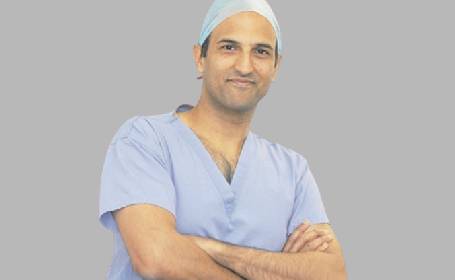
Mr Robin Bhatia MA(Oxon) PhD FRCS(SN) is a Consultant Spinal Neurosurgeon with a dedicated practice at The Great Western Hospital NHS Trust and The Ridgeway Hospital. He also holds an Honorary Consultant position at The National Hospital for Neurology and Neurosurgery in London. His work focuses entirely on the diagnosis and treatment of spinal problems, particularly those caused by wear and tear - the most common cause of chronic back and neck pain.
Mr Bhatia studied medicine at Exeter College, University of Oxford, followed by clinical training at Guy’s, King’s and St Thomas’ Medical Schools in London. He qualified as a doctor in 2000, earned a PhD in Clinical Neurosciences in 2010, and became a Fellow of the Royal College of Surgeons of England in 2011.
Mr. Bhatia is a highly experienced Consultant Spinal Surgeon with a career dedicated to the comprehensive care of spinal conditions. He qualified in medicine in 2000 and soon developed a deep interest in the complexities of neurosurgery. His passion for advancing clinical knowledge led him to complete a Doctorate in Clinical Neurosciences in 2010, reflecting his commitment to research-driven, evidence-based care.
In 2011, Mr. Bhatia was awarded the Neurosurgical Fellowship of the Royal College of Surgeons of England, a mark of distinction in his field. He then undertook the prestigious North London Complex Spinal Fellowship, training at both The National Hospital for Neurology and Neurosurgery and the Royal National Orthopaedic Hospital in Stanmore. This intensive fellowship provided him with advanced expertise in managing complex spinal disorders.
Since then, Mr. Bhatia has devoted his practice exclusively to the diagnosis and treatment of spinal conditions. His approach combines cutting-edge surgical techniques with a compassionate, patient-focused ethos. Mr. Bhatia is committed to delivering the highest standard of care tailored to each individual
“Too many people suffer from chronic spine pain. It’s one of the most debilitating problems in society. My goal is to help people overcome it. We must never give up—working together as a team is the best way forward.” - Mr Bhatia
Mr Bhatia is the Lead Spinal Surgeon at The Great Western Hospital and Chair of the Spinal Multidisciplinary Team, which meets regularly to review and plan treatment for complex spinal cases. This means that if you're under his care, your condition will benefit from the combined expertise of a team of specialists - ensuring you receive the safest, most effective treatment tailored to your needs.
Despite running a busy spinal practice, Mr Bhatia remains deeply committed to his patients. He takes pride in delivering high-quality, compassionate care and is known for making patients feel informed, reassured, and confident in their treatment journey.
Outside of work, he enjoys keeping fit, spending time with his family, watching snooker, and taking part in pub quizzes - bringing the same focus and curiosity to his personal life as he does to his medical practice.
Back pain and neck pain are probably the most debilitating afflictions in society. The spine is a complicated organ and there are different ‘pain-generating regions’. Mr Bhatia's approach is to take a full clinical history of your symptoms, examine for any neurological deficit and then request dedicated imaging.
MRI is a really sensitive way to define spinal anatomy. It can be reassuring to patients. Interpreted correctly, it can direct treatment. Mr Bhatia believes in an integrated approach to the management of spine pain, incorporating different disciplines like physiotherapy, pain management and sometimes spinal surgery.
Spinal steroid injections can be useful. They are daycase procedures under local anaesthetic. Primarily diagnostic, they can give longer term relief if carried out alongside a dedicated programme of physiotherapy, Mr Bhatia calls this a synergistic effect of two different treatments, for example patients report that they can engage with the physiothearpy exercises more comfortably after a spinal steroid injection. The MRI scan can direct him to the correct site to inject. Steroid injections can take between 2 and 6 weeks to take effect, sometimes even longer. If it does not help then that is also useful information, and we can move on to other possible pain generators.
Mr Bhatia believes in leaving spinal surgery as a last resort but appreciates it can positively transform people’s lives. Yes its higher risk compared to other types of surgery, but his job is to take you through this process and support you throughout. Some of the best outcomes are when you decompress the spinal nerve roots to help sciatica; or the spinal cord to help prevent paralysis; or fuse the spine when there is instability or deformity.
Mr Bhatia and his team are doing more and more daycase operations (meaning you get home the same day you come in) testament to the advances in minimal access techniques, improved anaesthesia and post-operative analgesia. He uses a sophisticated image guidance system to navigate screws and there is a role for robotics too to enhance accuracy and patient safety.
Having encountered everything from traumatic spinal injuries to life-threatening tumours, Mr Bhatia finds spinal surgery immensely rewarding. “Preventing paralysis or simply helping someone live life pain-free -these are the most meaningful outcomes of my work,” he says. “Knowing I’ve improved someone’s quality of life, especially in life-changing cases, is what drives me.”
The Ridgeway Hospital, Moormead Road, Wroughton, Swindon, SN4 9DD
Our private hospital offers treatments and services for patients from across the counties of Wiltshire, Gloucestershire, Berkshire and Oxfordshire

Circle Health Group works with all major UK health insurance providers. Simply let your provider know your chosen hospital to begin your treatment journey.


4742933
A General Medical Council (GMC) number is a unique ID that shows a specialist is officially registered and approved to practice medicine in the UK.
We want to make it as easy as possible for you to find the information you need, so we've gathered a list of frequently asked questions about our hospitals and services
You can either book an consultation via the online booking process, fill in the enquiry form, or give us a call at 0808 101 0337.
Find out how much private healthcare costs and how these prices break down.
Whether you have your own private medical insurance policy or are covered through your employer, we'll guide you through how to make a claim for treatment at a Circle Hospital.
The number one benefit of private healthcare for most people is that you'll experience a shorter waiting time for treatment. We don't have long waiting lists, and in general you'll simply get treatment as and when you need it.
As a private patient, you shouldn't experience long waits between appointments. We can usually offer you an initial consultation within days of you getting in touch, and we'll book you in for the treatments you need on a date and time that suits you.
Still not answered your question?
Read our full FAQs here