Muscle-sparing surgery
DIEP flap surgery: breast reconstruction The latest, most innovative technique in breast reconstruction surgery
- Natural looking breasts without implants
- Keeps your abdominal muscles intact
- Faster recovery time
- Lower risk of complications
Rating: 5 stars
-
 UK's leading hospital group 2024
 -
Private hospital group of the year 2024
-

Leading plastic and reconstructive surgery services
We provide the most advanced surgical techniques in state-of-the-art operating theatres performed by a leading expert in the field
-

Your safety comes first
We are committed to providing the best treatment in a clinically safe and secure environment
-

Treatment as unique as you
We build personalised plans with award-winning consultants to meet your individual needs
-

The aftercare you deserve
We develop your advanced aftercare programme to speed up your recovery and protect your joint health for years to come
Tailored care to suit your needs
We guarantee excellent outcomes and fast recovery times with a consultant you can trust. If you or your loved ones are in search of personalised care, you’re in safe hands with Circle Health Group.
-
Flap surgery is a type of breast reconstruction surgery where a new breast is created using tissue from elsewhere on your body. It results in a reconstructed breast that looks and feels more natural than a reconstructed breast using breast implants.
DIEP (deep inferior epigastric perforator) flap surgery is named after the deep inferior epigastric perforator artery, a blood vessel in your abdomen.
The reconstructive surgery may be performed at the same time as your mastectomy (immediate reconstruction) or carried out later as a separate procedure (delayed reconstruction).
DIEP flap surgery has the added benefit of a tummy tuck, as excess fat and tissue are taken from the abdomen to create a new breast.
DIEP flap surgery is a newer surgical technique known as a muscle sparing procedure. It is similar to TRAM (transverse rectus abdominal muscle) flap surgery in that it uses tissue from your abdomen, but, unlike with TRAM flap surgery, no muscle is removed during the procedure. This results in a faster recovery time and a lower risk of abdominal muscle weakness than with TRAM flap surgery.
DIEP flap surgery is a new and complex type of surgery and can only be performed by a plastic surgeon with special training in microvascular tissue transfer.
What happens during the surgery?
DIEP flap surgery is performed under general anaesthetic, meaning you’ll be asleep for the procedure and won’t feel any pain. The surgery normally takes around six to eight hours.
What happens during DIEP flap surgery varies depending on whether you’re having an immediate or delayed reconstruction. If you’re having a delayed reconstruction, you may have had a tissue expander placed under the skin of your chest during your mastectomy. The tissue expander works by gradually stretching your skin to make sure there is enough skin to create a new breast. If you had a tissue expander, it will be removed during your flap surgery.
During DIEP flap reconstruction surgery:
- Once the anaesthetic has taken effect, your surgeon will make a long incision (cut) in your lower abdomen. The incision is made from hip bone to hip bone, between your pubic hair and your belly button.
- Your surgeon removes a portion of skin (flap) containing fat and blood vessels from your abdomen. No muscle is removed.
- Your surgeon makes an incision in your chest (usually along the same incision line as from your mastectomy or lumpectomy)
- The flap is transferred to the breast site and the blood vessels are carefully reattached using microsurgery. These blood vessels are usually attached to the vein and artery in your armpit, but in some cases, a small piece of cartilage near your breastbone may be removed and the flap blood vessels may be attached to the underlying blood vessels.
- Once the blood vessels are reattached, your surgeon shapes the tissue to create a natural-looking breast
- Drains are usually placed in the incisions on your chest and abdomen to allow fluid to drain during your recovery
- Your surgeon will close the incisions in your chest and abdomen with stitches or staples and the skin of your abdomen is positioned so that your belly button remains in its natural position.
-
You may have been recommended DIEP flap surgery to reconstruct your breast after breast cancer surgery such as a mastectomy (breast removal) or lumpectomy (partial breast removal).
Deciding on breast reconstruction surgery is a personal choice that only you can make. Some reasons for deciding to have breast reconstruction surgery include:
- A permanent breast shape without the need for temporary prosthetics
- Giving your chest a more balanced look
- Clothes may fit better
- Feeling better about your body and increased self-esteem
Who is DIEP flap surgery suitable for?
DIEP flap surgery is a popular type of breast reconstruction surgery as it doesn’t take any abdominal muscle and results in a natural-looking breast. However, DIEP flap surgery isn’t suitable for everyone. If DIEP flap surgery isn’t the right type of surgery for you, talk to your consultant about a different type of breast reconstruction surgery.
DIEP flap surgery may be suitable for you if:
- You want a natural-looking breast, which can be more difficult to achieve with implants
- You are within the suitable weight range (normal weight or slightly overweight)
- You have enough spare tissue around your abdomen
- You have good blood supply to your abdominal tissue
- You are well enough to undergo lengthy surgery and have no serious health issues
- You haven’t had certain previous abdominal surgeries, such as a previous DIEP or TRAM flap procedure, colostomy, or abdominoplasty (tummy tuck)
-
The main benefit of DIEP flap surgery is that, unlike TRAM flap surgery, no muscle is removed during the procedure. The benefits of this include:
- Keeping your abdominal muscle strength
- Faster recovery time
- Lower risk of complications, such as abdominal hernia and fat necrosis
Other benefits of DIEP flap surgery include:
- No need for implants and their associated risks such as rupture, hardening or shifting of the implants
- A natural-looking breast
- Improved breast sensation
- Permanent results — the results of DIEP flap breast reconstruction surgery are permanent and won’t be affected if you gain or lose weight, as can be the case with implant surgery
-
Recovery from any type of surgery is different for everyone and depends on many factors including your age, general health, how your surgery went and whether there were any complications during your surgery or recovery.
Before your surgery, your consultant will tell you what to expect during your recovery. Knowing what to expect during your recovery can help your recovery to go more smoothly, so please ask any questions you may have.
You’ll need to spend about five days in hospital after your DIEP flap breast reconstruction surgery.
It’s normal to feel some postoperative pain or discomfort after your surgery. Your healthcare team will give you regular pain medication to help with this, but tell a member of the nursing staff if you still have pain after your surgery.
You may find it difficult to perform certain movements such as sitting down, standing from a sitting position, and getting in and out of bed for a few days after your surgery. This is normal following abdominal surgery, and your physiotherapist can show you some techniques to make this easier.
Your healthcare team will give you instructions on things you need to do during your recovery. Follow these instructions carefully to help your recovery go as smoothly as possible and call the hospital if you have any questions or concerns.
You will be advised about:
- Caring for your surgical wounds
- When you can start gentle exercise like walking and stretching
- When you can resume normal daily activities
- Any medications you need to take
- Any potential postoperative complications you need to be aware of
- Any follow-up appointments
Recovery from DIEP flap breast reconstruction surgery normally takes around six to eight weeks.
-
DIEP flap surgery and TRAM flap surgery are essentially the same in that they both take tissue from the abdomen and use it to reconstruct a new breast. The main difference between the two procedures is that TRAM flap surgery takes skin, fat, blood vessels and muscle, whereas DIEP flap surgery only takes skin, fat, and blood vessels, leaving the abdominal muscle intact.
Until recently, TRAM flap surgery was the gold standard in breast reconstruction surgery, and TRAM flap surgery has evolved over the years to take less abdominal muscle, a procedure known as muscle-sparing free TRAM flap surgery. DIEP flap surgery is the newest technique available, and no muscle is taken from the abdomen during the procedure.
-
The Priory Hospital, a leading private hospital for DIEP flap surgery.
At The Priory Hospital, we offer the latest breast reconstruction techniques performed by a leading expert in the field.
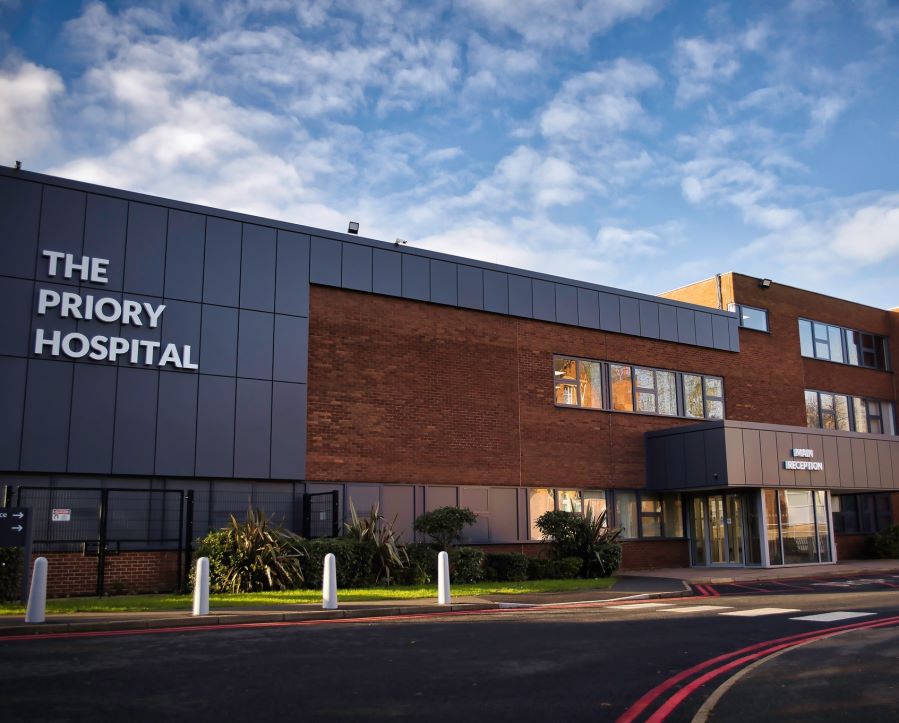
The Priory Hospital, part of Circle Health Group
-
The Priory, Birmingham, is one of the leading private hospitals in the UK, offering a combination of cutting-edge technology, experienced, dedicated staff, and modern facilities to ensure your surgery and recovery go as smoothly and safely as possible.
-
Our appointments offer you rapid access to a consultant of your choice. Simply pick from a broad range of times and see your chosen consultant quickly, usually within 48 hours. Consultations are usually in person, but we can provide remote appointments if needed.
-
We have invested in some of the best, most up-to-date technology for fast diagnosis and bespoke treatment plans. This, combined with the compassion and expertise of our healthcare professionals, allows us to provide the exceptional standards of care you deserve.
-
Priory Road,
Edgbaston,
Birmingham,
West Midlands
B5 7UGBy road
From the M42: Junction 7 (Northbound) or Junction 8 (Southbound) for the M6 North.
From the M6 North: Junction 6 and take the A38 through Birmingham - over a flyover and through three tunnels. Once you have passed through a major junction with McDonalds on the right, turn right at Wellington Road (the hospital will be signposted) carry on straight and you will come to a roundabout, take the first exit and carry on straight down the road the hospital will be on the right-hand side.
From the M5 North/West: Junction 3 and head for Birmingham. Follow the Hagley Road (A456) to Edgbaston, Five Ways. Take the third exit off the island (Islington Row, A4540). Go to the second set of lights (avoiding underpass) and turn right onto the A38 (McDonalds is on the right), turn right at Wellington Road (the hospital will be signposted) carry on straight and you will come to a roundabout, take the first exit and carry on straight down the road the hospital will be on the right-hand side.
From the M5 South/South: Junction 4 and take the A38 towards Birmingham for 8 miles. Take right-hand turn down Pebblemill Road and then turn left onto Pershore Road and then left again on Priory Road, carry on straight across the set of traffic lights and then the hospital will be located on the left.
From the East: Head for the City Centre, then take the ring road (A4540) onto the Belgrave Middleway section. Go past the mosque (avoiding underpass) and go straight onto the island. Turn right at Wellington Road (the hospital will be signposted). Carry on straight and you will come to a roundabout, take the first exit, and carry on straight down the road. The hospital will be on the right-hand side.
By train
Birmingham’s main railway station is New Street Station, situated in the City Centre, just over a mile from The Priory Hospital. Taxis are available from the station.
-

Book your consultation
Meet one of our leading experts by booking an appointment online, through live chat, or simply by giving us a call.
-

Meet your consultant
Your first consultation is when your consultant first gets to know you, asks about your symptoms and medical history, and decides whether DIEP flap breast reconstruction surgery is a suitable procedure for you. During the appointment, your consultant will explain the procedure, including how to prepare, what happens during the operation and what to expect during your recovery. Your first consultation is also an opportunity for you to ask any questions you may have about your surgery and recovery.
-

Begin your treatment plan
Tailored to your needs, you will begin your individualised treatment plan devised by a multidisciplinary team of experts who fully understand your needs.
-

Exceptional care from start to finish
We are here to ensure your healthcare journey runs as seamlessly as possible–this includes advanced aftercare packages to support your recovery.
-
Meet the expert
Miss Ruth Anne Waters has been a consultant for over 16 years and has a specialist interest in aesthetic and reconstructive breast surgery. She is one of the few surgeons in the region offering DIEP flap breast reconstruction surgery.

The cost of DIEP flap surgery
-
Treatment plans are tailored to your individual needs and conditions.
Here is a breakdown of costs.
Cost of consultations
Consultations start from £150
The cost of DIEP flap breast reconstruction surgery
Prices vary depending on your individual needs and your reason for having surgery.
-
Treatment is tailored to your needs, meaning the cost of surgery can differ from person to person depending on how long they need to be in hospital, their aftercare programme, and other unique factors.
-
Your initial consultation usually begins at £150. Our fixed-price packages include the cost of your surgery and all appropriate aftercare appointments. However, any pre-surgery diagnostic tests and your consultant’s outpatient appointment consultation fee are charged separately.
If you’re paying for yourself, our flexible payment options can help you spread the cost of your payment across a time that suits you. We offer fixed-term monthly payment plans over one to five years with no deposit required. If you decide to pay over 10 months, you will pay interest-free. If you are paying for a longer period, you will pay 9.9% APR.
-
If you have private health insurance, your surgery will usually be covered by your provider. Speak to your insurer directly to find out.
Trusted by the UK’s leading healthcare insurers.
We work with all major providers in the UK. Simply tell your provider which Circle Health Group hospital you would like to have treatment with.
Quality and safety is our priority
Our clinical excellence
Since January 2022 we have achieved:
-

60+
DIEP flap breast reconstruction procedures have been performed at The Priory Hospital.
-

95.7% of our patients
said their overall experience of our service was good, or very good
95% of our patients
said their overall experience of the nursing care was very good, or excellent
-
Multiple award-winning healthcare provider
-
Private hospital group of the year
2024
-
Private hospital group of the year
2023
-
Private hospital group of the year
2022
-
UK's leading private hospital group
2024
-
UK's top 30 big companies
2022
-

Trusted by the UK's leading healthcare insurers
Circle Health Group works with all major private healthcare providers in the UK. Simply tell your provider which Circle hospital you’d like to have treatment with.
Am I covered?


