

Your private health insurance
Circle Health Group works with all major UK health insurance providers. Simply let your provider know your chosen hospital to begin your treatment journey.
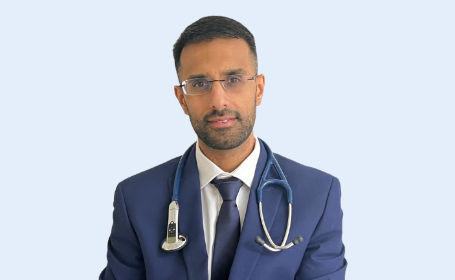
Dr Iqbal starts by asking what has brought the patient to see him, how the problem affects their daily life and what they hope to get from the appointment. He knows how frustrating it can be to live with symptoms while the cause remains unclear, or to try a treatment and find that it causes problems of its own. He takes time to hear what has already happened, review previous tests and treatments, and explain what the findings might mean. He works with each patient to agree a plan that takes account of their concerns, priorities and circumstances.
In lipid medicine, Dr Iqbal sees anyone who is concernedabout their cholesterol and would like a detailed specialist opinion. He explains what the individual results mean, how they fit with the person’s medical and family history, and what they tell us about their risk of heart attack and stroke. He also sees patients with inherited high cholesterol, raised triglycerides or elevated lipoprotein(a), also known as Lp(a), and those whose cholesterol remains above target or who have had side effects with statins. He discusses which steps could make a meaningful difference to their risk and what would be practical for them. If he suspects an inherited condition, he explains what the findings could mean for close relatives and whether they might benefit from testing.
Dr Iqbal leads the East Cheshire Endocrinology Service at Vernova Healthcare in Macclesfield and runs specialist NHS lipid clinics in Mid Cheshire. He chairs the East Cheshire biochemistry multidisciplinary meeting, where clinicians and laboratory specialists work through complex blood test results. He also contributes to regional specialist discussions on pituitary and adrenal disorders and inherited lipid conditions. These roles give him experience of coordinating care when a diagnosis is uncertain or several specialties need to be involved.
Dr Iqbal graduated in medicine with honours from the University of Liverpool. He holds an MSc in Clinical Biochemistry and a PhD from The University of Manchester, and completed specialist training in diabetes, endocrinology and general internal medicine in 2023. His training in Clinical Biochemistry helps him make sense of complex hormone and cholesterol results, especially when levels fluctuate or several results need to be interpreted together. He explains which findings matter, what they mean for the patient and whether further testing would help guide their care.
Dr Iqbal has published extensively in journals that use peer review, with research on lipid metabolism, obesity and the metabolic effects of bariatric surgery. His research informs how he evaluates the evidence for a test or treatment and explains what it could mean for an individual patient. He has also taught endocrinology to medical students and junior doctors. At the end of a consultation, his aim is for patients to understand what their results suggest, what remains uncertain and what will happen next, including how any further results will be reviewed and what will be shared with their GP.
Cholesterol and cardiovascular risk
If you’ve been told your cholesterol is high or you have a family history of heart disease at a young age, Dr Iqbal can help you understand what that means for your own risk of a heart attack or stroke. He has a particular interest in inherited high cholesterol (familial hypercholesterolaemia), raised triglycerides and raised lipoprotein(a). He also helps people who have had side effects from statins find a treatment they can tolerate.
Thyroid disorders
Dr Iqbal sees people with overactive and underactive thyroid conditions, including Graves’ disease and Hashimoto’s thyroiditis. If your thyroid blood tests are abnormal, he’ll talk through how you’ve been feeling, whether your results could explain your symptoms and what to do next.
Pituitary disorders
A raised prolactin level or another abnormal pituitary hormone result can be difficult to interpret on its own. Dr Iqbal reviews the result alongside your symptoms and any previous tests to help decide whether further investigation is needed. He also sees people with a diagnosed pituitary condition who would like a review of their treatment or follow up.
Adrenal disorders
If an adrenal nodule has been found unexpectedly on a scan, Dr Iqbal can explain what the finding means and whether hormone tests or follow-up imaging would be helpful. He also investigates suspected adrenal insufficiency and other adrenal hormone disorders.
Raised calcium and parathyroid disorders
If a blood test has shown raised calcium, Dr Iqbal can help establish the cause. For people with an overactive parathyroid gland (primary hyperparathyroidism), he explains how it may affect their health and discusses whether monitoring or treatment is appropriate.
Low testosterone
Dr Iqbal assesses symptoms that may be related to low testosterone. He’ll review how you’ve been feeling alongside your blood results, explain what a low or borderline result means and discuss whether repeat testing or further investigation would help clarify the cause.
Obesity and cardiometabolic health
Dr Iqbal takes time to understand your weight history, what you’ve already tried and what you’d like to achieve. He looks at how weight, blood pressure, cholesterol and blood sugar affect your health together, including your risk of type 2 diabetes, heart disease and stroke. He’ll discuss practical changes and, where appropriate, newer weight-management medicines that act on GLP-1 pathways, such as semaglutide and tirzepatide. If you’re considering medication, he’ll talk through the potential benefits, side effects and what follow up would involve.
The Alexandra Hospital, Mill Lane, Cheadle, SK8 2PX
Our private hospital offers treatments and services for those who live in Manchester, Stockport and Cheshire
Circle Health Group works with all major UK health insurance providers. Simply let your provider know your chosen hospital to begin your treatment journey.


7148863
A General Medical Council (GMC) number is a unique ID that shows a specialist is officially registered and approved to practice medicine in the UK.
We want to make it as easy as possible for you to find the information you need, so we've gathered a list of frequently asked questions about our hospitals and services
You can either book an consultation via the online booking process, fill in the enquiry form, or give us a call at 0808 101 0337.
Find out how much private healthcare costs and how these prices break down.
Whether you have your own private medical insurance policy or are covered through your employer, we'll guide you through how to make a claim for treatment at a Circle Hospital.
The number one benefit of private healthcare for most people is that you'll experience a shorter waiting time for treatment. We don't have long waiting lists, and in general you'll simply get treatment as and when you need it.
As a private patient, you shouldn't experience long waits between appointments. We can usually offer you an initial consultation within days of you getting in touch, and we'll book you in for the treatments you need on a date and time that suits you.
Still not answered your question?
Read our full FAQs here