

Your private health insurance
Circle Health Group works with all major UK health insurance providers. Simply let your provider know your chosen hospital to begin your treatment journey.
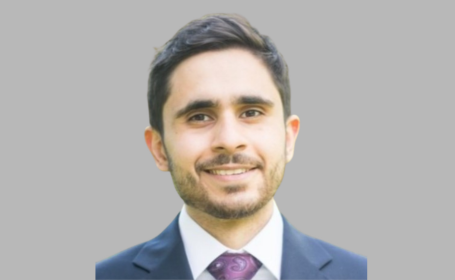
Dr Mohammed Abdul-latif is a Consultant Clinical Oncologist whose practice centres on urological and gynaecological cancers alongside complex brachytherapy. At Mount Vernon Cancer Centre he holds the post of Clinical Lead for brachytherapy, overseeing and delivering advanced treatment across a broad range of tumour sites.
Brachytherapy places a radiation source directly within or immediately adjacent to a tumour, allowing a very high dose to be delivered to the target while sparing surrounding healthy tissue in a way that external beam radiotherapy cannot match. Complex brachytherapy takes this further: rather than relying on standard applicators alone, it involves the image-guided placement of interstitial needles and catheters into the tumour itself, with the implant designed around each patient's individual anatomy and disease. Dr Abdul-latif undertakes complex delivery for gynaecological, urological, oesophageal and rectal cancers, including contact radiotherapy, and performs interstitial implants for rarer presentations involving the skin, breast and soft tissues. Techniques of this kind remain available in only a small number of UK centres, and they are frequently what makes curative treatment possible where surgery would otherwise be the only option, or where no option remained at all.
He established the country's only dedicated breast brachytherapy programme. Its most valuable application is in women whose breast cancer has recurred after previous radiotherapy, where standard practice has long been mastectomy, as the breast cannot usually be treated a second time with external beam radiotherapy. Multicatheter interstitial brachytherapy allows a second course of radiotherapy to be delivered to the tumour bed alone, with a steep dose fall-off that protects the previously irradiated skin, lung and heart. For carefully selected patients this makes breast conservation a realistic alternative to mastectomy in the salvage setting. The programme also supports accelerated partial breast irradiation and palliative indications, and he has published on interstitial breast brachytherapy dosimetry.
His wider radiotherapy practice includes modern external beam techniques such as VMAT/IMRT and stereotactic radiotherapy (SBRT/SABR), and hydrogel spacer (SpaceOAR) implantation forms a routine part of his prostate cancer treatment protocols. He also maintains an active interest in systemic treatment, managing patients receiving chemotherapy, targeted therapies and immunotherapy across a variety of clinical settings.
Dr Abdul-latif qualified from Imperial College School of Medicine in 2013, finishing in the top decile of his year, and trained across North London hospitals in general medicine before specialising in clinical oncology. He holds a Postgraduate Diploma (PGDip) in Oncology and a Doctorate of Medicine (MD) from the University of Manchester, completed under the supervision of Professor Peter Hoskin, with a thesis on the role of functional MRI in cervical cancer. He publishes regularly and presents at international meetings including ESTRO. He was awarded the Royal College of Radiologists' Kay-Durrant Fellowship, which took him to France and Italy for further training in breast, rectal and head and neck brachytherapy.
He is an Honorary Senior Lecturer at Brunel Medical School, a role that recognises a substantial ongoing contribution to university teaching alongside clinical practice. It involves the delivery and design of undergraduate oncology teaching, supervision and assessment of medical students during their clinical placements, examining, and the supervision of student research projects, as well as supporting the school's wider academic and curriculum development.
The Clementine Churchill Hospital, Sudbury Hill, Harrow, HA1 3RX
Our private hospital offers treatments and services for those who live in Harrow, Wembley and Northolt
Circle Health Group works with all major UK health insurance providers. Simply let your provider know your chosen hospital to begin your treatment journey.


7419099
A General Medical Council (GMC) number is a unique ID that shows a specialist is officially registered and approved to practice medicine in the UK.
We want to make it as easy as possible for you to find the information you need, so we've gathered a list of frequently asked questions about our hospitals and services
You can either book an consultation via the online booking process, fill in the enquiry form, or give us a call at 0808 101 0337.
Find out how much private healthcare costs and how these prices break down.
Whether you have your own private medical insurance policy or are covered through your employer, we'll guide you through how to make a claim for treatment at a Circle Hospital.
The number one benefit of private healthcare for most people is that you'll experience a shorter waiting time for treatment. We don't have long waiting lists, and in general you'll simply get treatment as and when you need it.
As a private patient, you shouldn't experience long waits between appointments. We can usually offer you an initial consultation within days of you getting in touch, and we'll book you in for the treatments you need on a date and time that suits you.
Still not answered your question?
Read our full FAQs here