

Your private health insurance
Circle Health Group works with all major UK health insurance providers. Simply let your provider know your chosen hospital to begin your treatment journey.
 Initial consultation price:
£300
Initial consultation price:
£300
Initial consultation price:
£300
Initial consultation price:
£300
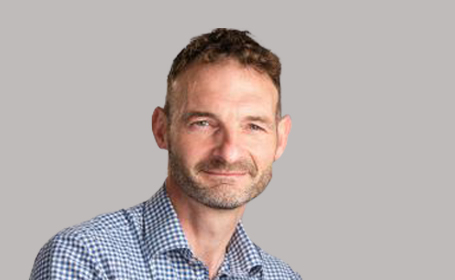
Mr Brooks uses advanced robotic surgery techniques to help his patients achieve the best possible outcomes and fastest recovery from their surgery.
In his work with Circle Health Group, Mr Brooks works alongside a multidisciplinary team to offer personalised and holistic treatment for every patient he sees.
Patients who require complex abdominal wall surgery are entered into a bespoke 6 to 12 week Prehabilitation program prior to undergoing surgery, to ensure that they are in the best condition for surgery and have the best outcomes. The program was set up by Mr Brooks and is led from the Physiotherapy Department at The Park Hospital. It includes weight loss advice, core strength and aerobic exercises and smoking cessation advice.
With complex liver and pancreas disease he works closely with the multidisciplinary team meetings that he attends at Nottingham University Hospitals and Lincoln County Hospital.
Mr Brooks is a hepatobiliary surgeon, which means he specialises in the surgery on the liver, bile ducts and pancreas, treating both benign and malignant (cancerous) diseases. He also works as a trauma and emergency surgeon, operating on trauma to the torso.
“About 20 years ago I had a hernia repair using conventional surgery. Around a year and a half ago, I realised another hernia had developed. I’m a joiner by trade and though I wasn’t in any pain, I didn’t want to risk making it worse as I was waiting for surgery.
“I’d been quoted a waiting list time of around two years, so instead I went for a consultation with Mr Adam Brooks, who told me that he could repair my hernia the following week, at The Park Hospital, in Nottingham.
“During the consultation he advised that he would be utilising robotically-assisted surgery, and I was quite comfortable with that, reasoning that whilst the technology is very new, it would be accurate down the sub-millimetre.
“The experience was the same as conventional surgery, but the scar left behind was much smaller than it was 20 years ago, and recovery was much faster. I was able to walk into the hospital at 11 in the morning and walk out again the same day. I didn’t need to stay over and I felt really comfortable after the procedure.”
Mr W from Lincolnshire
At The Park Hospital, Mr Brooks uses the da Vinci robotic surgical system to perform a variety of types of surgery, including hernia repair and cholecystectomy (gallbladder removal). The da Vinci is an advanced robotic tool that helps our surgeons to be more precise and accurate during surgery. It allows us to perform a greater number of operations using minimally invasive techniques.
Compared to traditional surgery, robotic surgery using the da Vinci tool can lead to less post-operative pain, faster recovery, and better long-term outcomes.
"The main benefits are vision, precision and dexterity,” explains Mr Brooks. “The surgical view is magnified 10 times, allowing us to see structures that are invisible even laparoscopically.
"The precise movements of the instruments and the enhanced magnification of the surgical view improve the safety of the operation, whilst the ability to deploy fluorescent imaging helps identify critical structures.
"I would always use the robot now to perform cases where I would previously have used laparoscopic surgery. And I am also able to undertake many more cases robotically (and therefore minimally invasively) that I would not previously have been able to do laparoscopically."
Mr Brooks graduated from the University of Sheffield in 1992. He went on to undertake fellowships in various countries around the world, including South Africa, Australia and the USA, giving him significant experience in international healthcare.
This experience formed the start of his distinguished career as a surgeon specialising in areas including hepatobiliary (liver, pancreas, gallbladder) surgery and emergency abdominal and chest surgery for severely injured patients and more recently, robotic minimally invasive surgery.
He has taught trauma surgical skills to students around the world including the USA, Australia, Norway, New Zealand and Denmark, and has lectured and taught extensively in the UK.
In his capacity as a trauma surgeon, Mr Brooks has been a member of the UK reserve forces since 1998 and has been deployed widely as a Consultant Surgeon with the UK military. In 2012, he was awarded an OBE.
As well as his private practice with Circle Health Group, Mr Brooks is the Director of the East Midlands Major Trauma Centre at Nottingham University Hospitals. He was responsible for the regionalisation of major trauma services across the East Midlands, the development of Queen’s Medical Centre into the East Midlands regional Major Trauma Centre, and for the modernisation of treatment pathways for patients with emergency surgical conditions across Nottingham.
To relax, he enjoys road and gravel bike riding, which he takes part in both locally and overseas. He also enjoys swimming, surfing and running. He spends the rest of his downtime with his children and looking after an expanding collection of farm animals including alpacas, Pygmy goats, ducks, chickens and geese.
Lincoln Private Hospital, Nettleham Road, Lincoln, LN2 1QU
Our private hospital offers treatments and services for patients in the Lincoln, Lincolnshire and surrounding areas

The Park Hospital, Sherwood Lodge Drive, Burntstump Country Park Arnold, Nottingham, NG5 8RX
Our private hospital offers a range of advanced services and treatments for patients living in Nottinghamshire and beyond
Circle Health Group works with all major UK health insurance providers. Simply let your provider know your chosen hospital to begin your treatment journey.


3566264
A General Medical Council (GMC) number is a unique ID that shows a specialist is officially registered and approved to practice medicine in the UK.
We want to make it as easy as possible for you to find the information you need, so we've gathered a list of frequently asked questions about our hospitals and services
You can either book an consultation via the online booking process, fill in the enquiry form, or give us a call at 0808 101 0337.
Find out how much private healthcare costs and how these prices break down.
Whether you have your own private medical insurance policy or are covered through your employer, we'll guide you through how to make a claim for treatment at a Circle Hospital.
The number one benefit of private healthcare for most people is that you'll experience a shorter waiting time for treatment. We don't have long waiting lists, and in general you'll simply get treatment as and when you need it.
As a private patient, you shouldn't experience long waits between appointments. We can usually offer you an initial consultation within days of you getting in touch, and we'll book you in for the treatments you need on a date and time that suits you.
Still not answered your question?
Read our full FAQs here